CHRO Trends 2026 Report
Post content
By Zac Upchurch, Chief Operating Officer, Talent Strategy Group

Welcome to the ninth edition of the Chief Human Resources Officer (CHRO) and Chief People Officer (CPO) Trends report, which provides a view into the evolving landscape of Human Resources leadership across the Fortune 200 companies. This year’s report identifies several key trends shaping the role and introduces the newly appointed 2025 Fortune 200 CHROs and CPOs.
Key Findings Include:
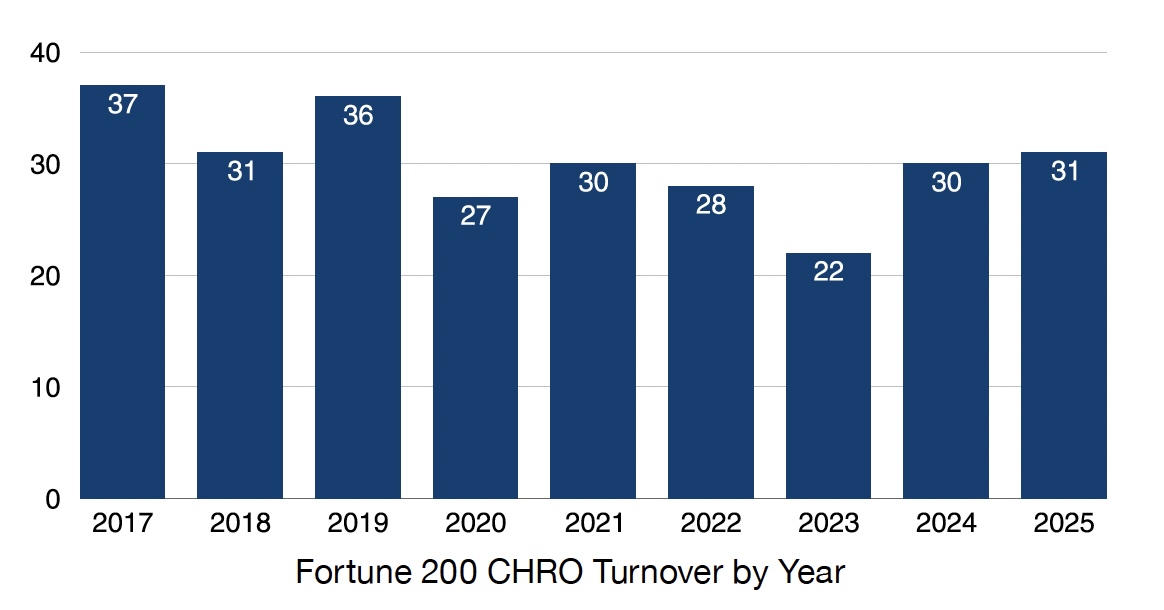
- CHRO/CPO Turnover Accelerated: Thirty-one Fortune 200 companies appointed a new CHRO or CPO in 2025, representing a 16% annual turnover rate and the highest turnover rate since 2019. Turnover was especially concentrated in the first quarter and among the largest companies, with Fortune 50 companies accounting for 35% of all 2025 appointments.
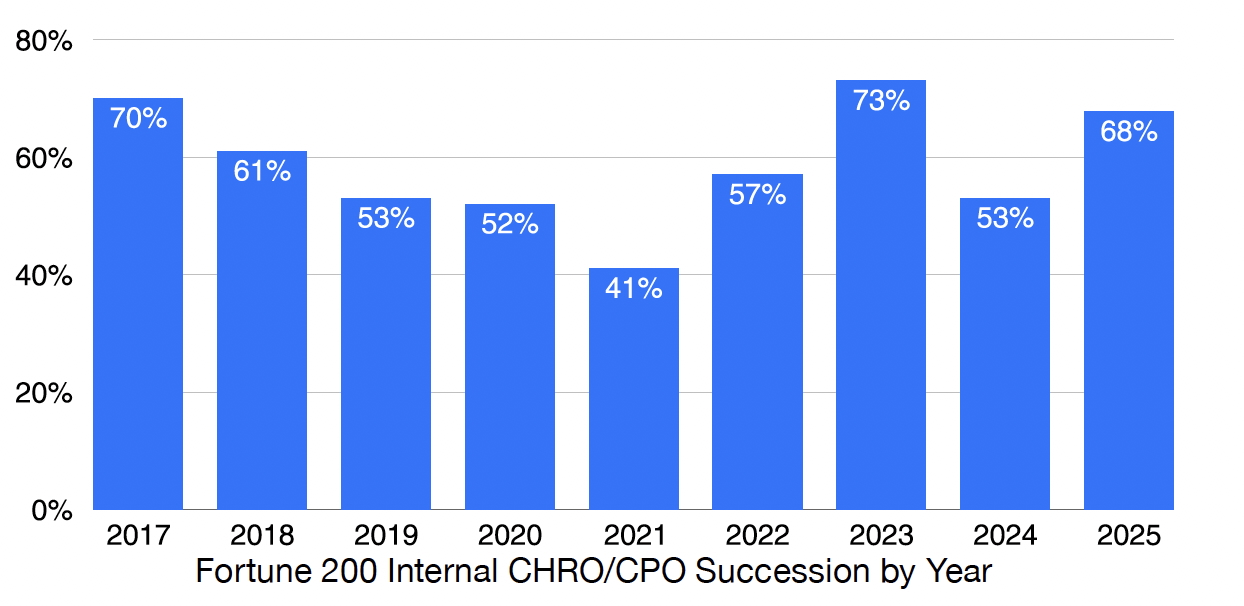
- Internal Succession Rebounded: Sixty-eight percent of 2025 CHRO/CPO appointees were internal successors, an increase from 2024 and one of the highest internal succession rates since this report began.
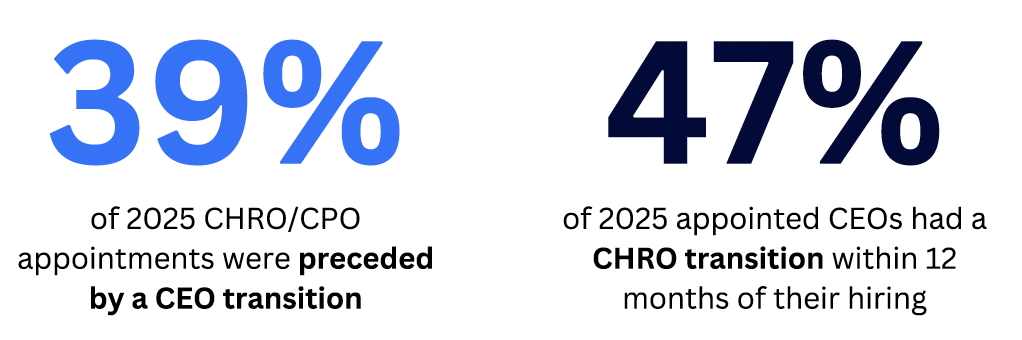
- CEO Transitions Remained a Key Driver of CHRO/CPO Turnover: CHRO/CPO turnover continued to closely track CEO transitions. Thirty-nine percent of CHRO/CPO appointments were preceded by a CEO transition, and nearly half of Fortune 200 CEOs appointed in 2025 replaced their CHRO or CPO.
I (Zac Upchurch) would like to thank the report contributors, and I look forward to working with these Chief Human Resources Officers and Chief People Officers to advance the field of Human Resources in 2026 and beyond.
Trend #1: CHRO/CPO Turnover Accelerates
Chief Human Resources Officer (CHRO) and Chief People Officer (CPO) turnover increased in 2025, with 31 companies appointing a new head of Human Resources. These appointments represent a 16% annual turnover rate and imply an average CHRO tenure of approximately 6.25 years.
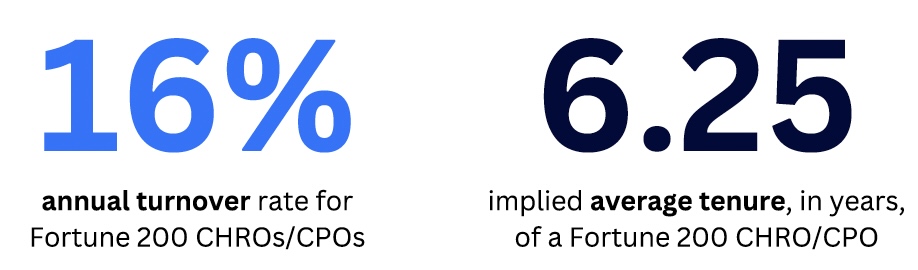
This turnover rate is the highest since 2019 and represents a modest increase from 15.5% in 2024. Notably, the majority of 2025 turnover occurred in the first quarter, with 16 appointments, representing 52% of the year’s total turnover.
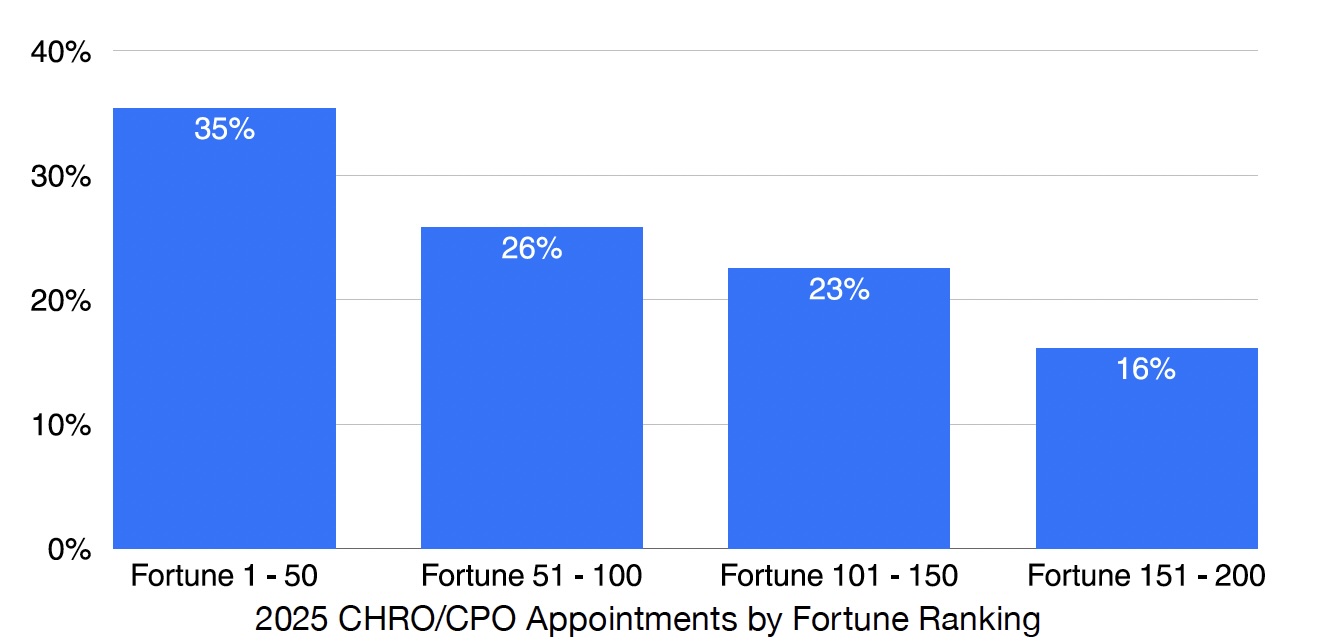
In a reversal from 2024, turnover was concentrated among larger companies as measured by annual revenue. Fortune 50 companies accounted for 11 new CHRO appointments, representing 35% of 2025 turnover, compared with 5 appointments among Fortune 151-200 companies, representing 16% of the total.
Trend #2: Internal Succession Rebounds to 68%
In 2025, 68% of CHRO appointments were made through internal succession, with companies elevating an internal candidate into the top Human Resources role. This represents a 15 percentage-point increase, or 28% year-over-year increase, in internal CHRO succession and one of the highest internal succession rates since this report’s 2017 inception.
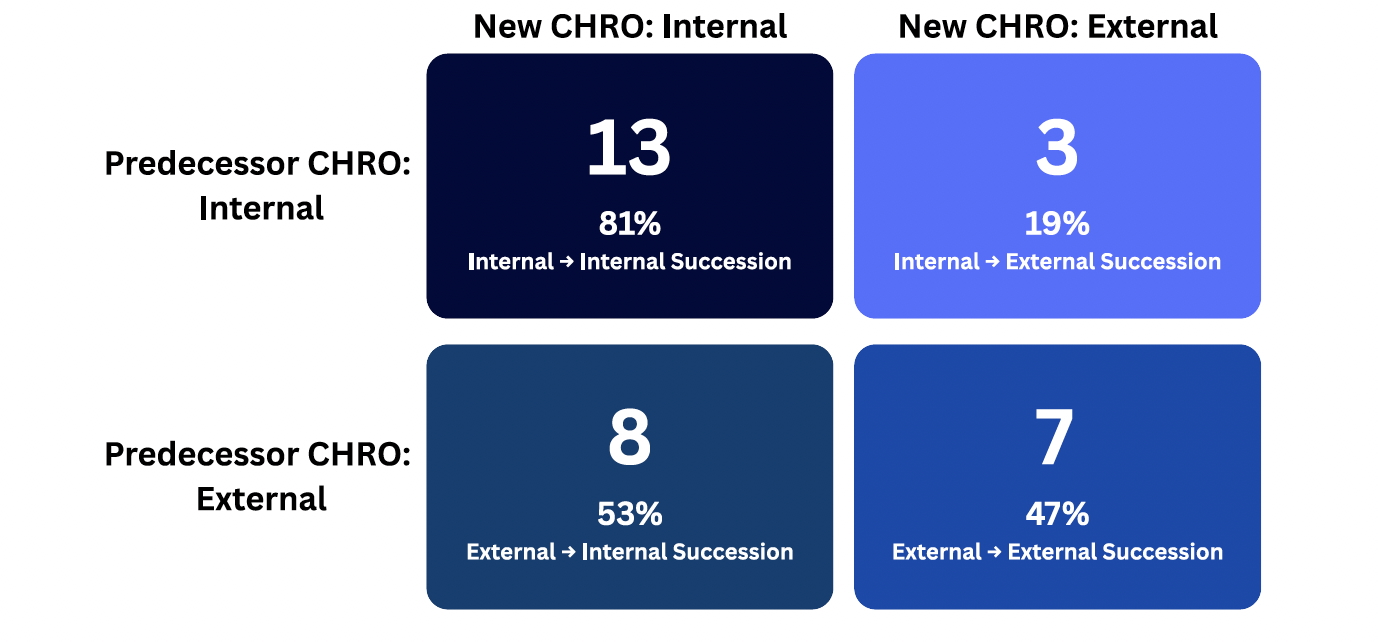
Organizations with a history of internal CHRO succession largely continued that pattern in 2025. Among companies whose predecessor CHRO was appointed internally, 81% again selected an internal successor for the role. In contrast, organizations with a history of external CHRO succession were more evenly split, with 53% appointing an internal successor and 47% hiring externally.
Among external CHRO appointments, none had prior experience at the organization, suggesting there were no boomerang CHRO appointments in 2025. Instead, 90% of externally appointed CHROs had previously served as a CHRO, highlighting the premium companies placed on prior CHRO experience when hiring externally. When CHROs moved to a new organization and CHRO role, all but one moved to a larger organization, as measured by annual revenue. For example:
- Kristin Major moved from HPE to NVIDIA
- Christy Pambianchi moved from Intel to Caterpillar
- Stacy Dillow moved from Fluor Corporation to HPE
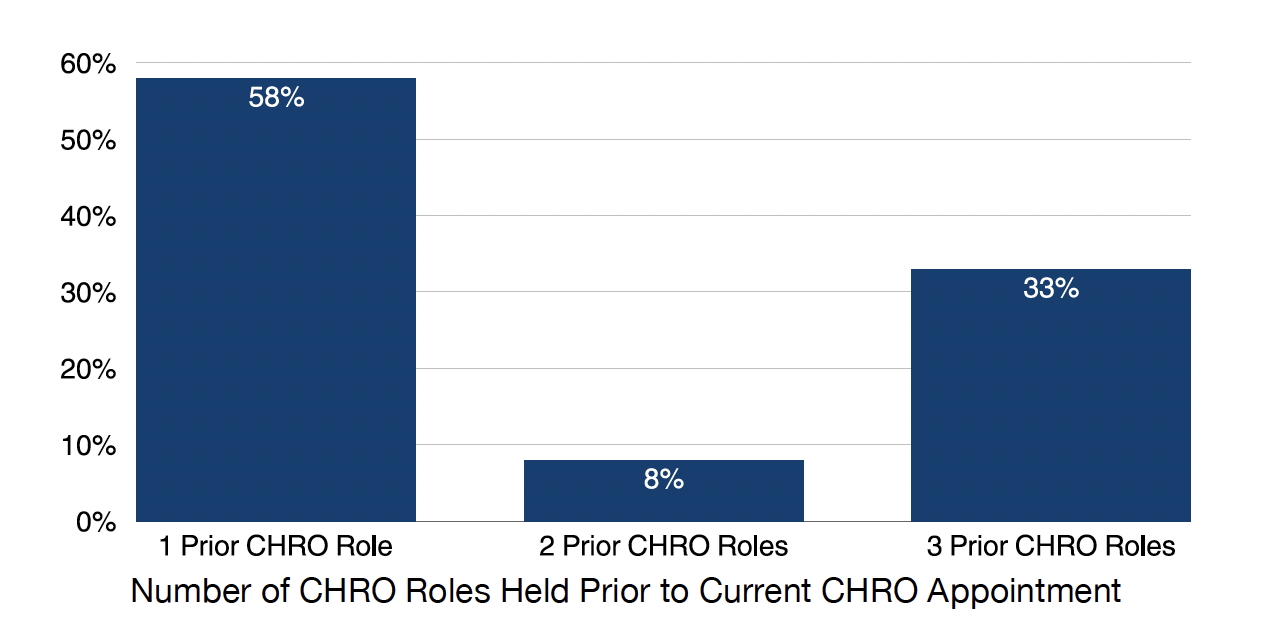
Further, among 2025 CHRO appointees with prior CHRO experience, the majority (58%) had served as a CHRO only once. However, CHROs with multiple prior CHRO stints remained prevalent, where 8% had held two prior CHRO roles and 33% had held three.
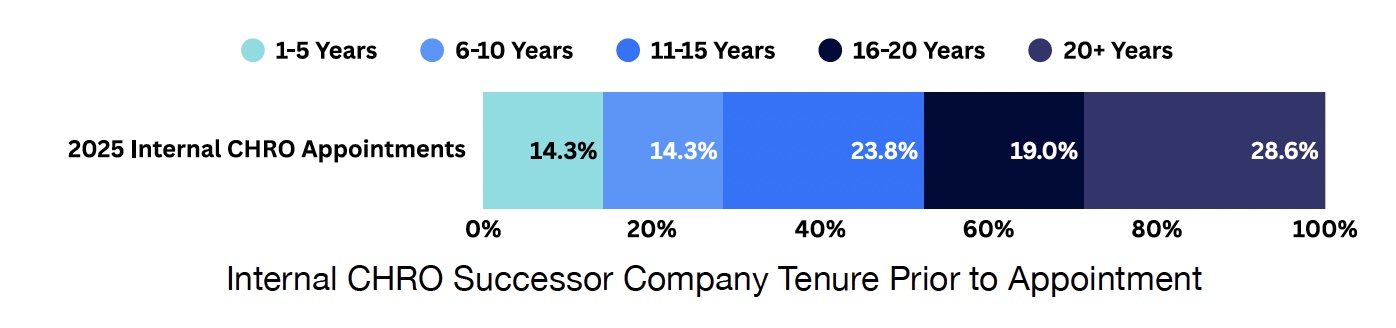
When CHRO succession was internal, the average company tenure prior to appointment was 11.2 years. Nearly 50% of internal appointees had 16 or more years of company tenure before appointment, including 29% with more than 20 years.
Trend #3: Women Continue to Dominate CHRO Appointments
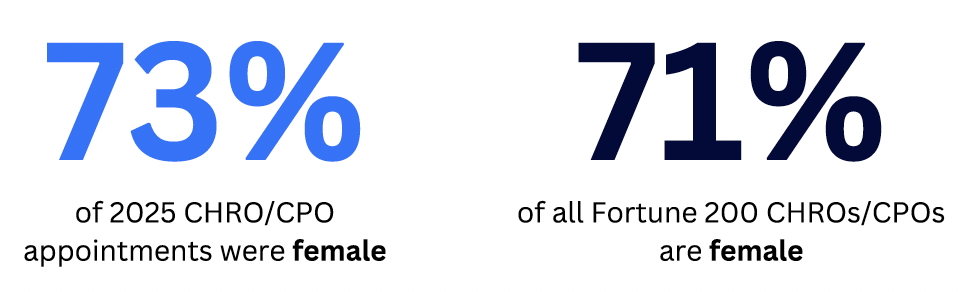
Women accounted for 73% of 2025 CHRO appointments,* a decline from 2024’s 80% rate but still ahead of the 71% rate in the Fortune 200 overall.
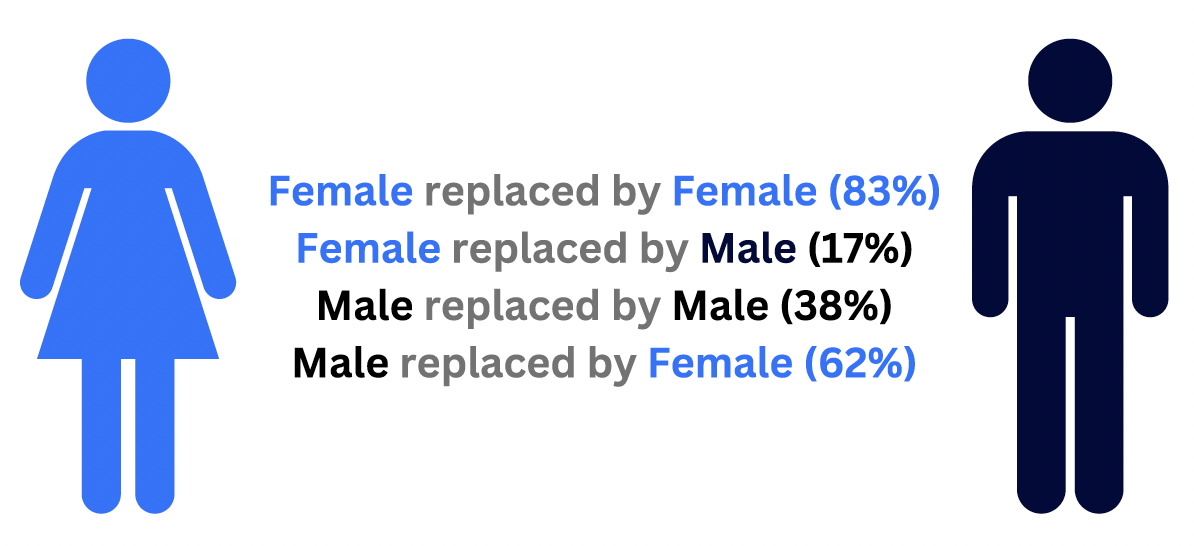
When the predecessor CHRO was a woman, organizations most often appointed another woman to the CHRO role, doing so in 83% of these transitions. This rate exceeded both the 2025 appointment rate for women of 73% and the overall Fortune 200 rate of 71%. In contrast, when the predecessor CHRO was a man, organizations still most often appointed a woman as successor. Only 17% of women CHRO predecessors were succeeded by men, while male-to-male CHRO succession occurred in 38% of cases.
Interestingly, women accounted for 90% of the 2025 external CHRO appointments. This represents a meaningful departure from the broader Fortune 200 CHRO population, where women account for 66% of externally hired CHROs.
*Morgan Stanley appointed co-CHROs, one woman and one man. This was proportionally accounted for in this analysis.
Trend #4: Deep Business and Global Experience Emerge as More Common
Business experience outside of Human Resources was present in the backgrounds of 42% of 2025 CHRO appointees, roughly in line with the 46% rate among Fortune 200 CHROs overall. However, among 2025 CHRO appointees with experience outside of Human Resources, most spent the majority of their careers outside of the function. This experience was also diverse, rather than concentrated in Legal, as has historically been the norm. For example:
- Stephanie Smith from The Home Depot spent most of her career in Operations and Supply Chain roles.
- Thomas Batterbee from Nucor Corporation served in a variety of business roles before moving into General Manager roles of increasing scope and complexity.
- Rodolfo Camacho from Kraft Heinz spent nearly half of his career in Marketing and Project Management roles.
Global experience was also more common among 2025 CHRO appointees, rising to 35% after declining to 23% in 2024. This may reflect the increasing complexity of leading Human Resources in large, complex, global companies. Among appointees with global experience, multiple international assignments were common. For example:
- Michelle Green from Chevron had multiple global assignments, including nearly three years in Thailand and nearly four years in Angola.
- Carol Surface from HP Inc. had multiple global assignments, including over a year in the United Arab Emirates and nearly a year in Hong Kong.
- Stacy Dillow from Hewlett Packard Enterprise had multiple global assignments, including two years in the Philippines, four years in the United Kingdom, two years in Puerto Rico, and time split between the United States and Canada.
Trend #5: HR Experience Remains a Near Prerequisite
Human Resources experience remains a near prerequisite for advancement to the CHRO role. Among CHROs appointed in 2025, 87% had HR experience prior to appointment. This is roughly in line with Fortune 200 CHROs overall, where 90% had Human Resources experience before assuming the top Human Resources role.

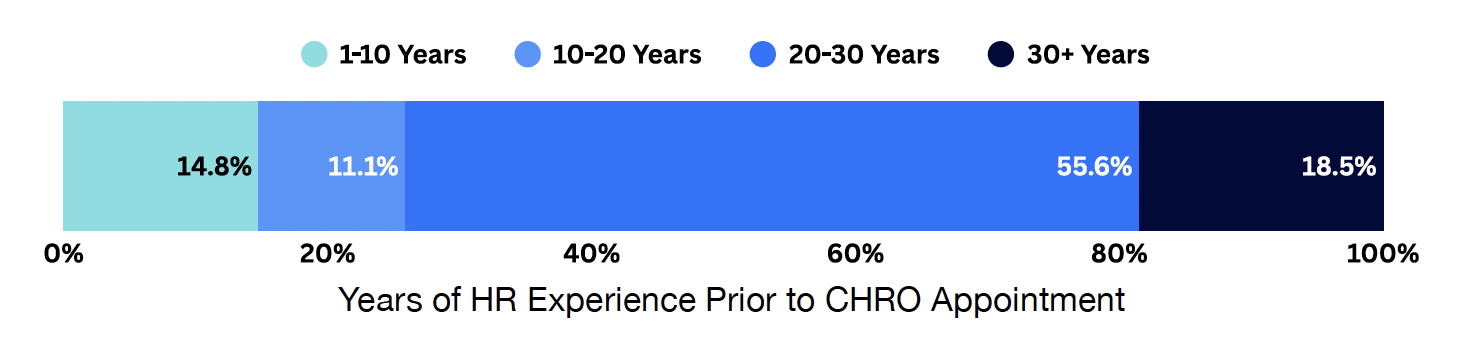
Among 2025 CHRO appointees with prior Human Resources experience, most had substantial tenure in the function, where 56% had 20 to 30 years of HR experience before assuming the role. The next most common HR experience ranges were 30 or more years and 1 to 10 years, representing 19% and 15% of 2025 CHRO appointments, respectively.
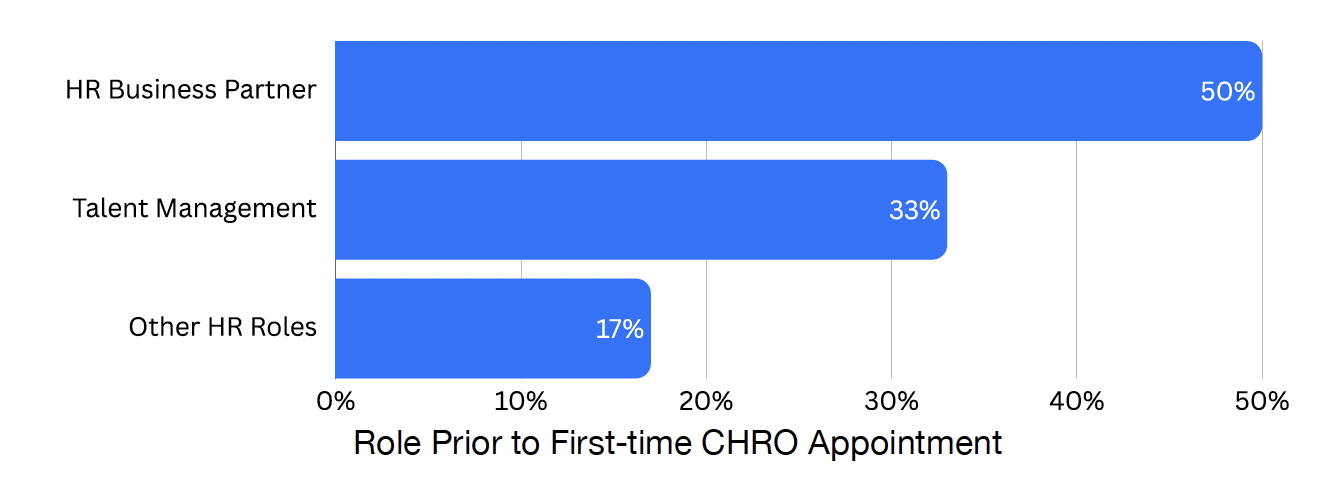
For first-time CHROs appointed in 2025 with prior Human Resources experience, the HR Business Partner role remained the most common pathway, with 50% serving in an HRBP role immediately before becoming CHRO. Talent Management also emerged as a meaningful secondary pathway, with 33% previously serving as Chief Talent Officer or Head of Talent Management. The remaining first-time CHRO appointees came from HR Operations, Total Rewards, or Talent Acquisition roles.
Among CHROs appointed in 2025 without prior HR experience, 100% were internal successors and came primarily from Legal, General Management, Supply Chain, or Customer Relations backgrounds.
Trend #6: CEO Transitions Remain a Key Correlate of CHRO Turnover
CHRO turnover typically tracks closely with CEO transitions. Of the CHRO appointments in 2025, 39% were preceded by a CEO transition within the prior 12 months. Similarly, among Fortune 200 CEOs appointed in 2025, nearly half, 47%, replaced their CHRO. Said differently, CEO transitions remain one of the strongest predictors of CHRO turnover. In many cases, so goes the CEO, so goes the CHRO.
Trend #7: CHRO and CPO Titles Reach Parity, While Level and Compensation Remains Variable
For the first time, the Chief Human Resources Officer and Chief People Officer titles were equally common among 2025 CHRO appointees. 42% used the Chief Human Resources Officer title, or a close variant, while 42% used the Chief People Officer title, or a close variant. The remaining appointees used broader Human Resources or Human Capital titles.

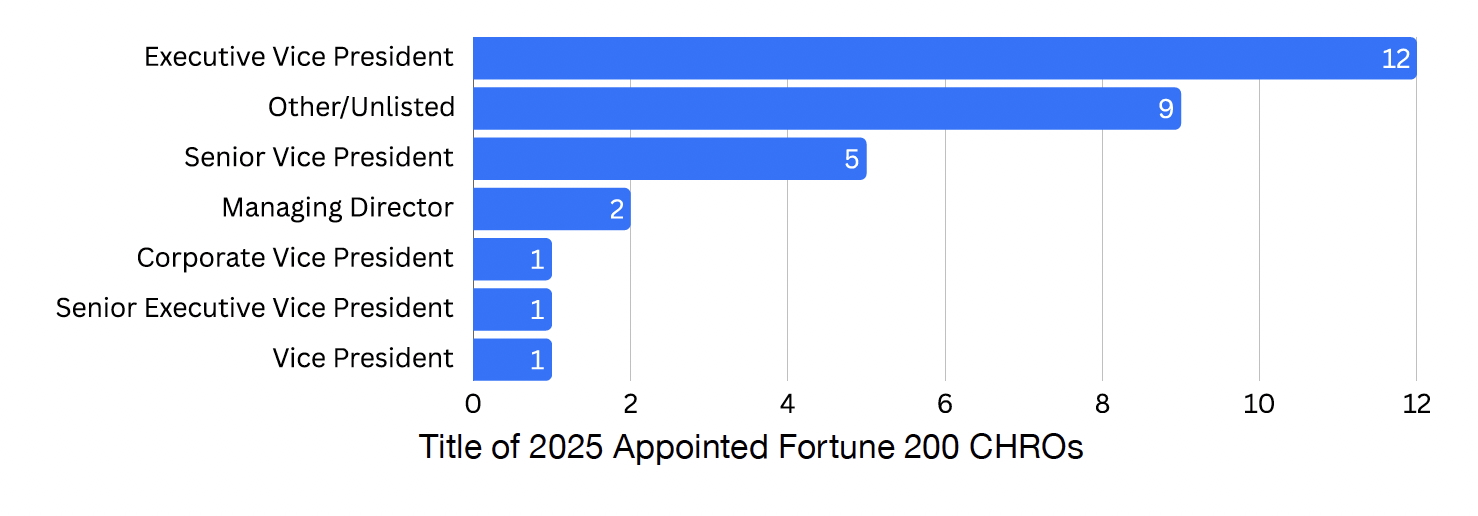
There was also significant variability in the hierarchical title attached to the CHRO role. While Executive Vice President was the most prevalent title among 2025 CHRO appointees, organizations used a wide range of titles, including Corporate Vice President, Senior Executive Vice President, Executive Vice President, Senior Vice President, Vice President, Managing Director, and other or unlisted hierarchical titles. This pattern mirrors the Fortune 200 population overall, where Executive Vice President remains the most common title.
Few 2025 CHRO appointees were identified as Named Executive Officers (NEOs) in corporate reporting, which would require disclosure of their compensation and typically indicate that the CHRO is among the organization’s five highest-paid executives. Just three of the CHROs appointed in 2025 were NEOs, representing less than 10% of appointees. Their disclosed 2025 compensation included:

It is important to note that these figures reflect only the three 2025 CHRO appointees who were NEOs and are therefore a very small and unrepresentative sample size. Further, in all three cases, disclosed compensation was likely elevated relative to steady-state compensation due to one-time compensation events, such as make-whole compensation for forfeited rewards from a prior role or organization. As a result, these CHROs are unlikely to receive the same level of compensation in 2026 and beyond and may not retain NEO status in future corporate reporting. To illustrate, among the three CHROs with publicly reported compensation, go-forward target compensation took the following form:
- Base salary ranged from $700,000 to $850,000 per year.
- Short-term incentive/bonus ranged from $750,000 to $875,000 per year.
- Long-term equity targets were more variable, ranging from $1,925,000 to $2,700,000 per year.
About the Research
This report was produced by analyzing the Fortune 200 companies (based on the 2025 Fortune ranking) and publicly available information for Chief Human Resources Officers and Chief People Officers. We additionally spoke with many CHROs and CPOs, investor relations of respective companies, and the CHROs/CPOs teams to validate data where publicly available information was not sufficient.
In total, 194 of the Fortune 200 companies had an identifiable CHRO or CPO in 2025. The trends highlight those 194 organizations. Some companies do not have a sitting Chief Human Resources or Chief People Officer, or the role was vacant in 2025. In those situations, the organization was excluded from this report’s analysis.
About the Author
Zac Upchurch leads The Talent Strategy Group, an HR and Talent Management consulting firm. He frequently consults with the Boards and Executive Teams of the world’s most advanced organizations on Human Resources and Talent Management with a focus on the intersection of people and organizations, and enabling the full potential of both.
Zac graduated Summa Cum Laude from Arizona State University with a Bachelor’s of Science in Economics. He can be reached at [email protected].
About the Talent Strategy Group
The Talent Strategy Group helps the world’s highest performing organizations transform Human Resources and their ability to grow talent. Our advisory services include HR strategy, organization design, HR leader assessment, and HR process design. We partner with private equity firms on deal generation, due diligence, and value creation plans from a talent focus. Our education and development services are based at our Talent Management Institute, which is the world’s most popular executive education program on talent. We teach executives and HR leaders how to build better talent, faster through our public and private programs. We advise public and private companies, NGOs, and public sector organizations across geographies and industries. More information is available at www.talentstrategygroup.com.