2026 HR Operating Model Report
Post content
HR is getting smaller as client demands increase. Yet the problems that limit HR team performance – weak role clarity, unclear decision rights, inconsistent partnership and sketchy measurement – remain largely unresolved.
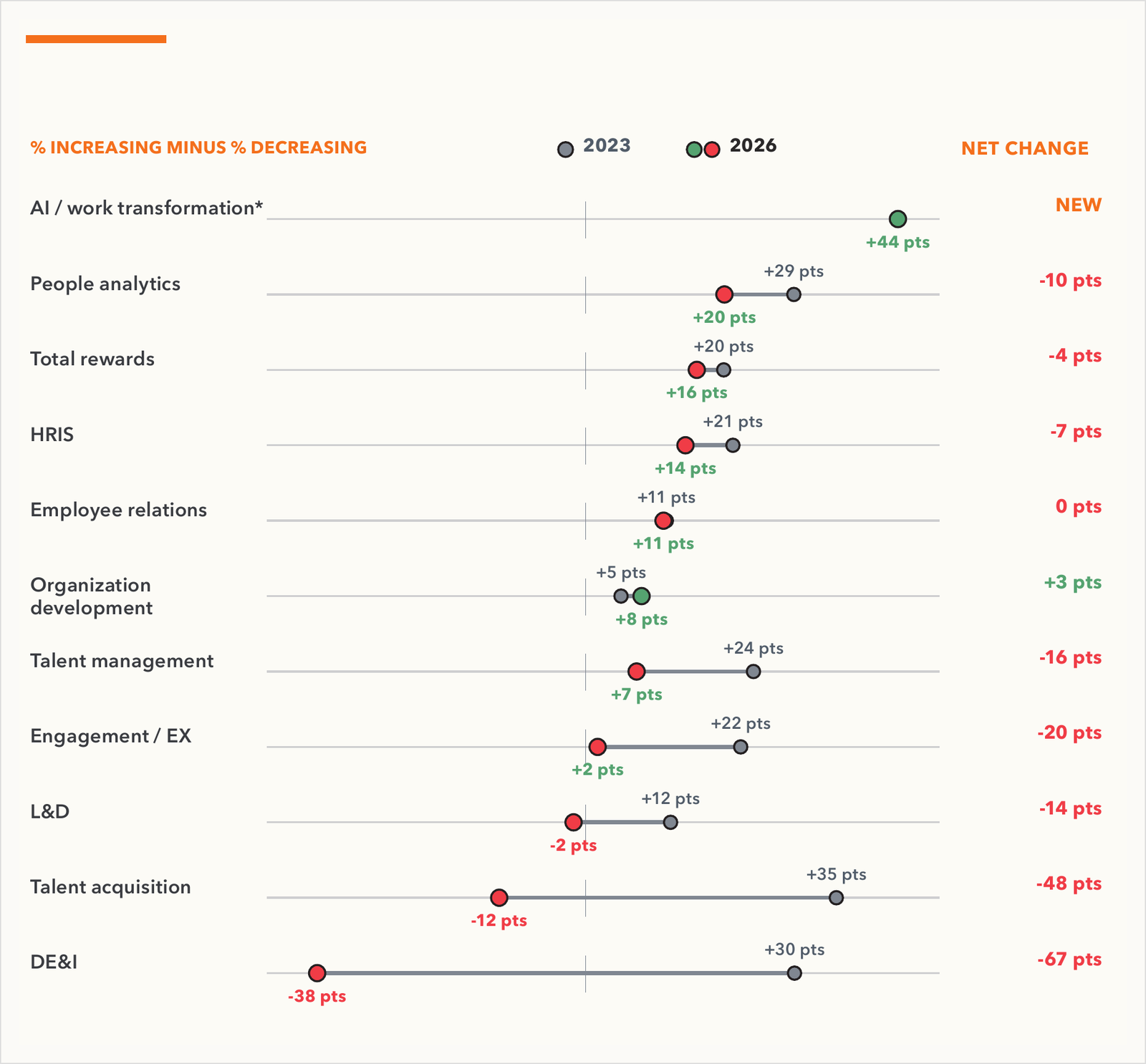
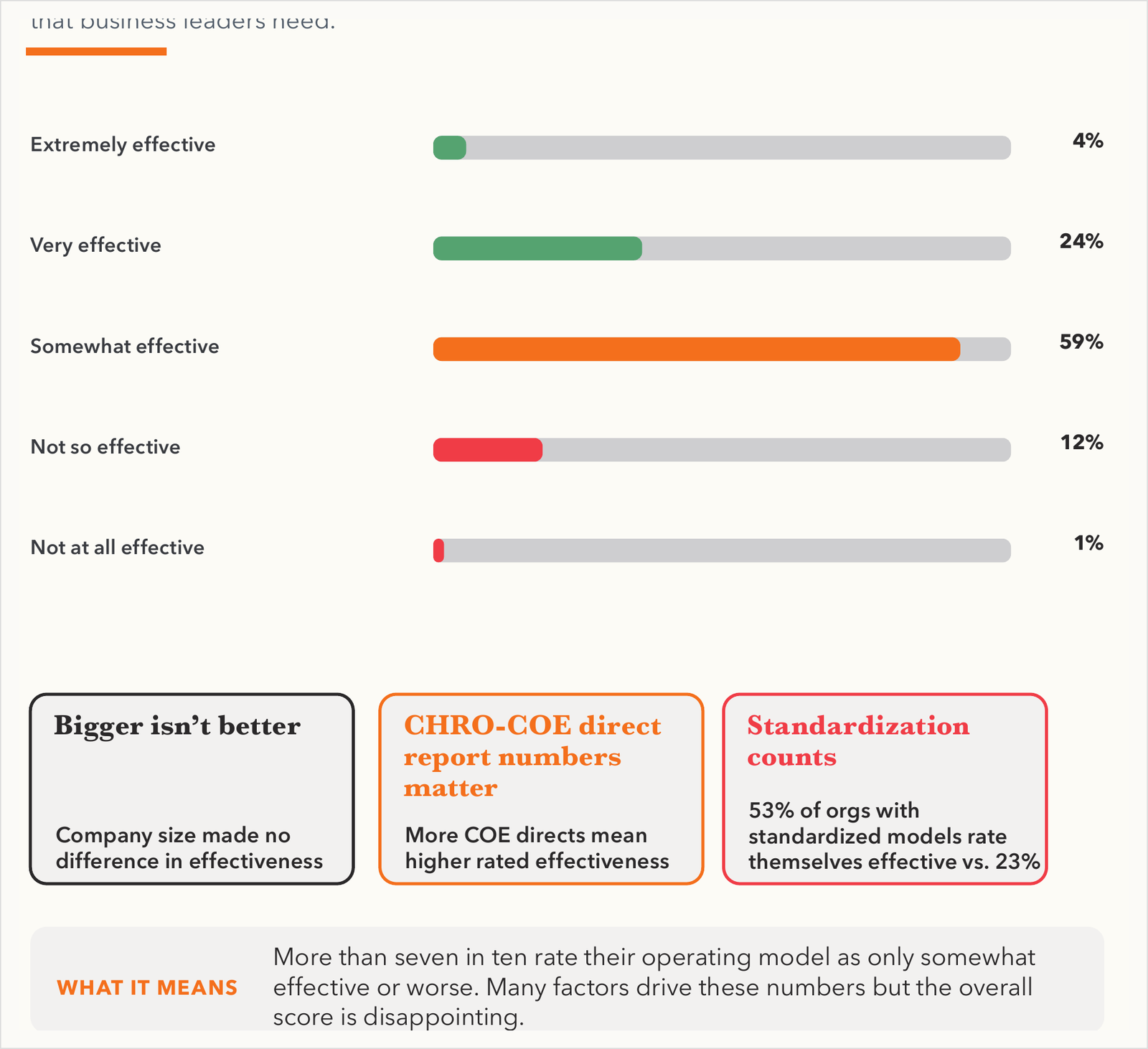
The 2026 Talent Strategy Group HR Operating Model Survey tells a blunt story: the growth era has ended, but the hard work has only begun. Across comparable centers of expertise (COEs), the balance of organizations adding versus cutting staff fell from +21 percentage points in 2023 to just +3 points in 2026. Large employers are already shrinking their HR teams. At the same time, only 27% of respondents rate their HR operating model very or extremely effective.
The familiar three-pillar model – HR business partners, COEs and shared services – still dominates. The model itself is not the problem. Execution is.
The story in 10 words
Same model. Fewer people. It is still not working well enough.
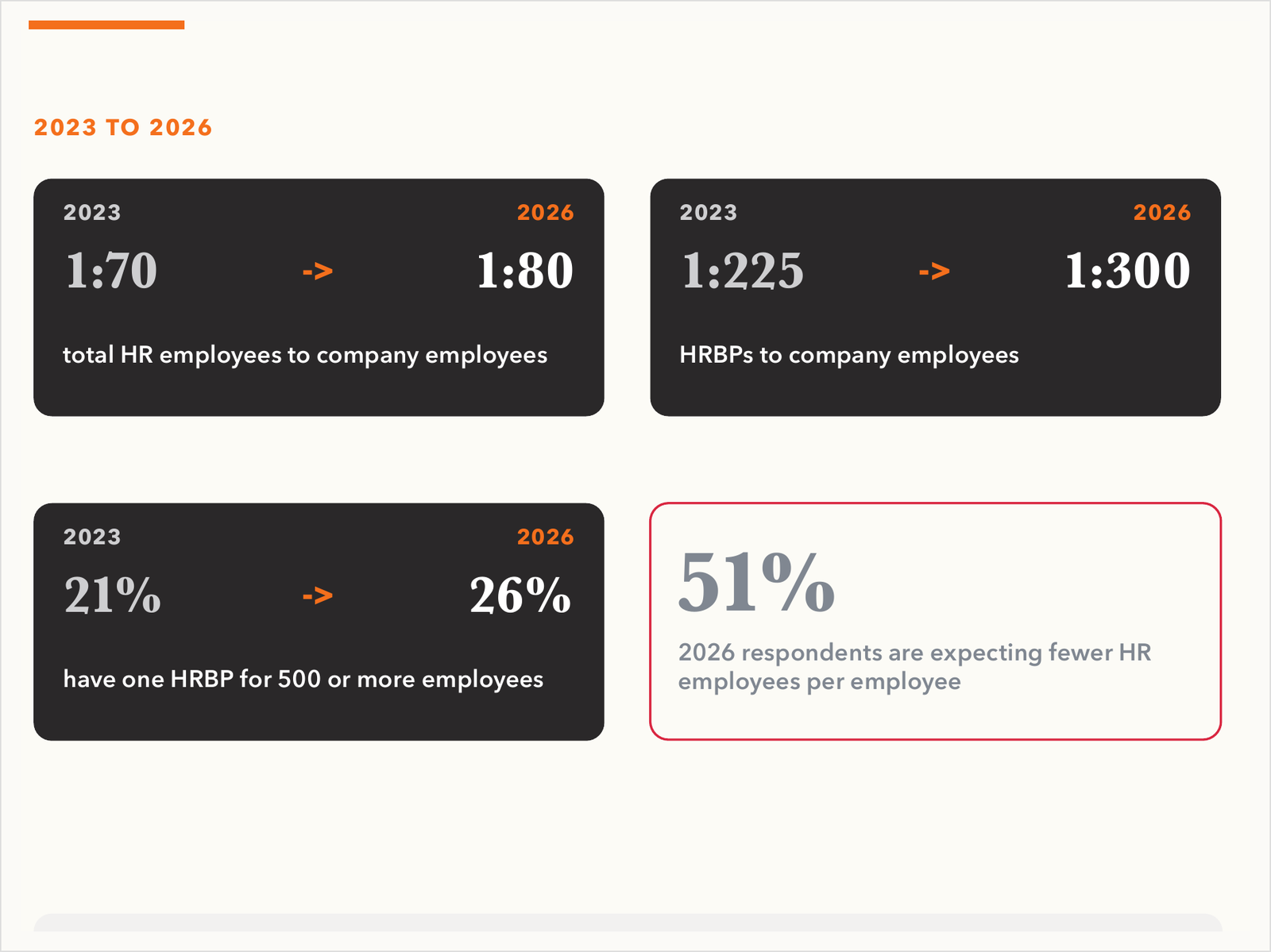
- 51% expect fewer HR employees per company employee.
- Only 15% report very clear responsibilities and decision rights.
- Only 27% rate their HR operating model very or extremely effective.
Five findings that should guide CHROs and HR strategy
1. The HR growth era is over
HR headcount growth has nearly stopped. Talent Acquisition and DE&I reversed most sharply, and Learning and Development moved into negative territory. AI/work transformation is the clear exception: it is the only area where adding staff is nearly as common as holding steady.
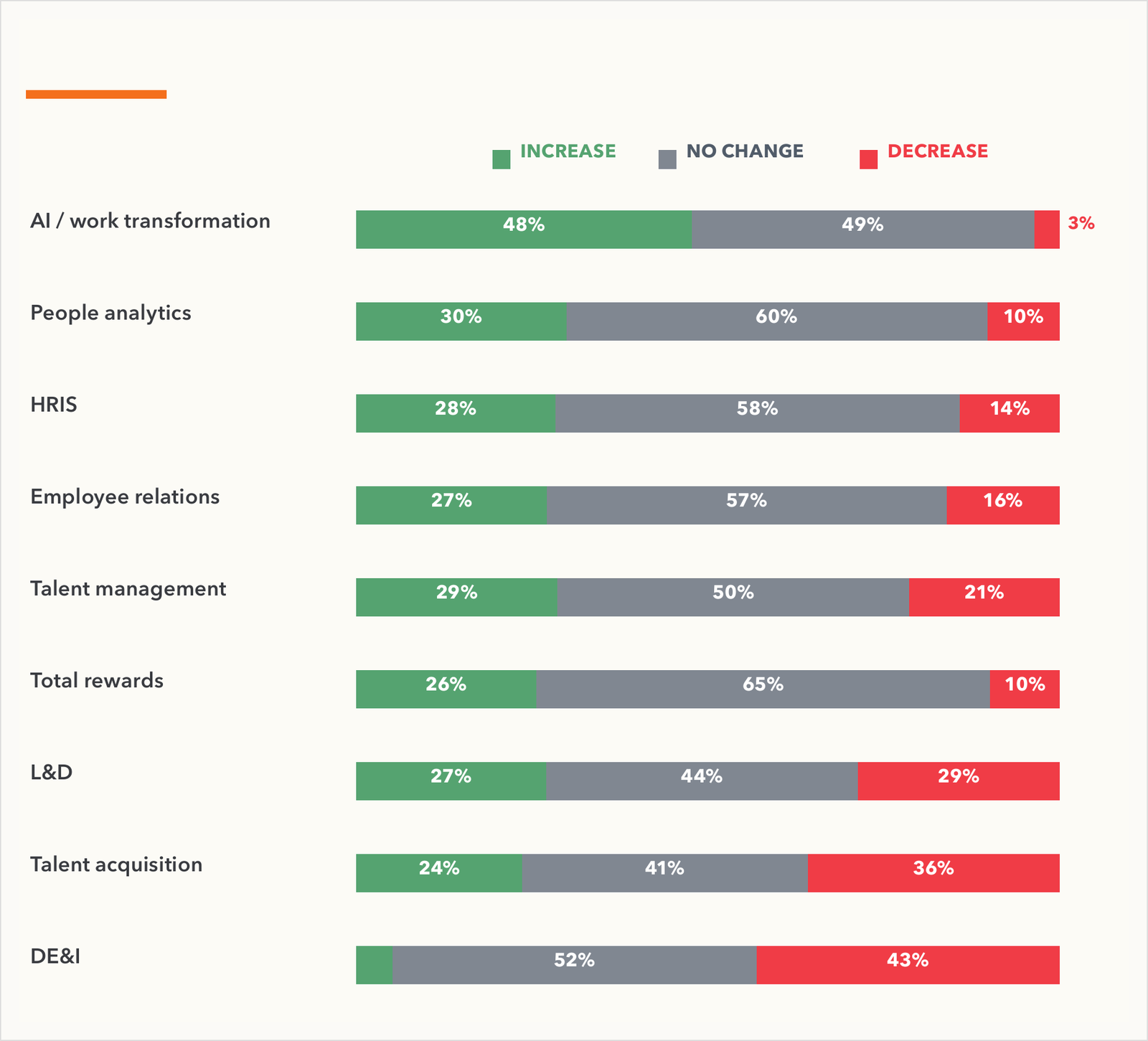
Most COEs are holding headcount steady, but the direction is clear. In Talent Acquisition, 36% are decreasing headcount versus 24% increasing it. In DE&I, 43% are decreasing and just 5% are increasing.
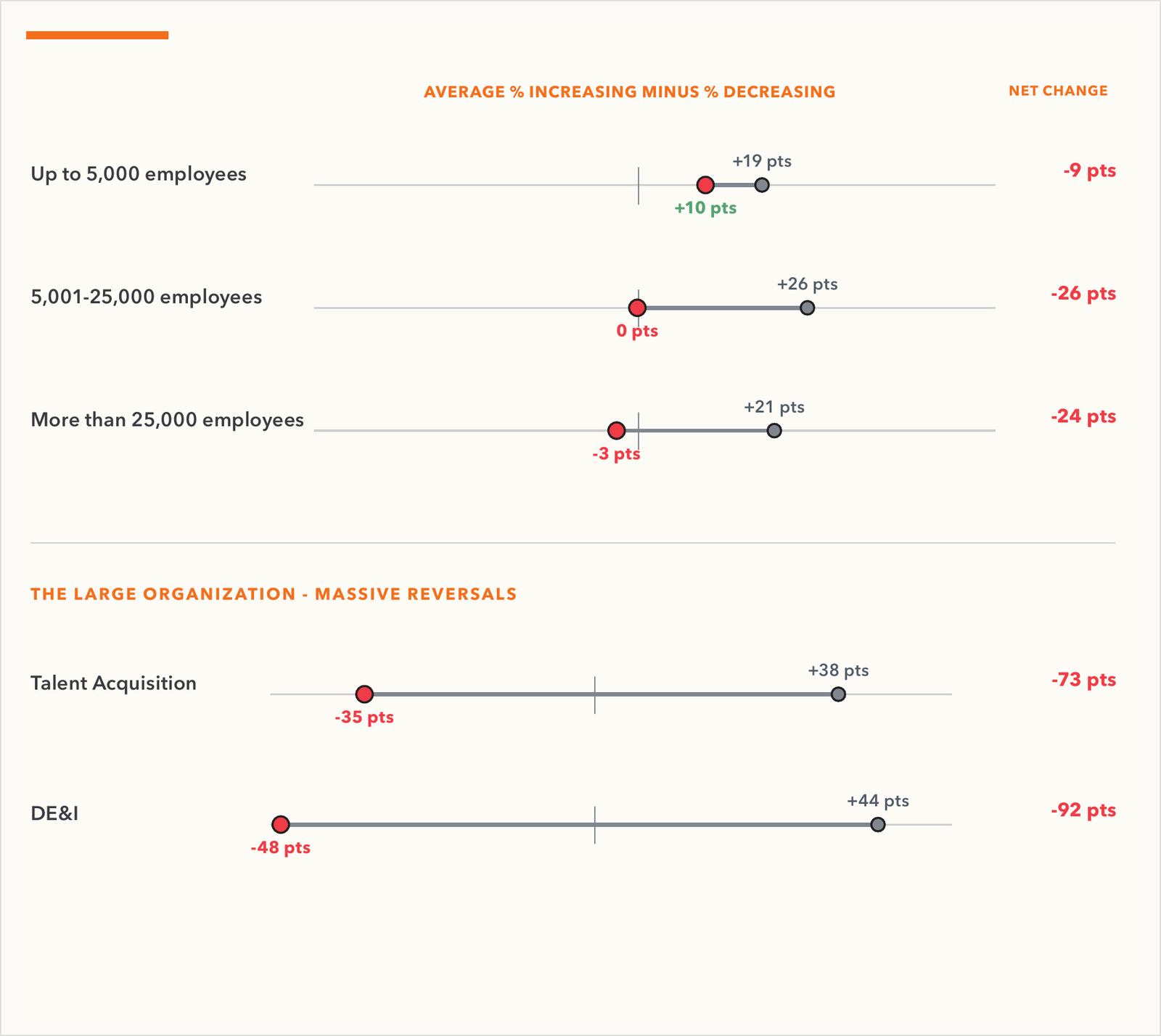
Scale matters. Smaller organizations remain modestly positive, mid-sized organizations are flat, and employers with more than 25,000 employees moved from a +21-point growth balance in 2023 to -3 points in 2026. Among the largest organizations, Talent Acquisition fell to -35 points and DE&I to -48 points.
The staffing ratios are changing too. The typical total-HR-to-employee ratio moved from 1:70 to 1:80. The typical HRBP now supports 300 employees, up from 225 in 2023. More than half of respondents expect the total HR employee ratio to become even leaner.
2. HR still does not work well enough as one team
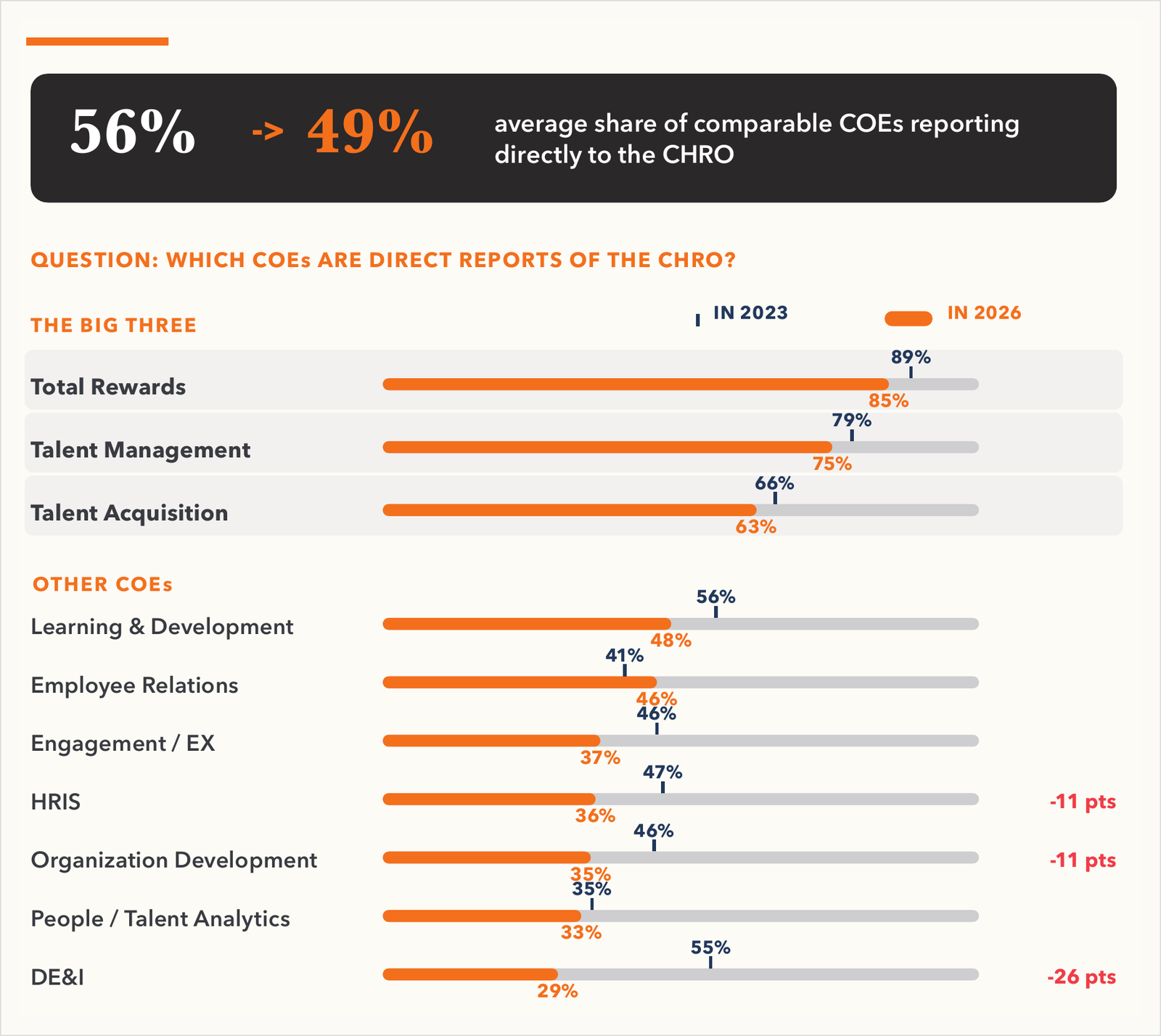
Total Rewards and Talent Management remain the COEs CHROs most often keep close, followed by Talent Acquisition. But the average share of comparable COEs reporting directly to the CHRO declined from 56% to 49%.
At the same time, fewer organizations position the HRBP as the sole owner of the business relationship. The share saying the HRBP owns the primary relationship fell from 74% in 2023 to 53% in 2026. Because the answer choices changed, the direction of the shift is more reliable than its exact size.
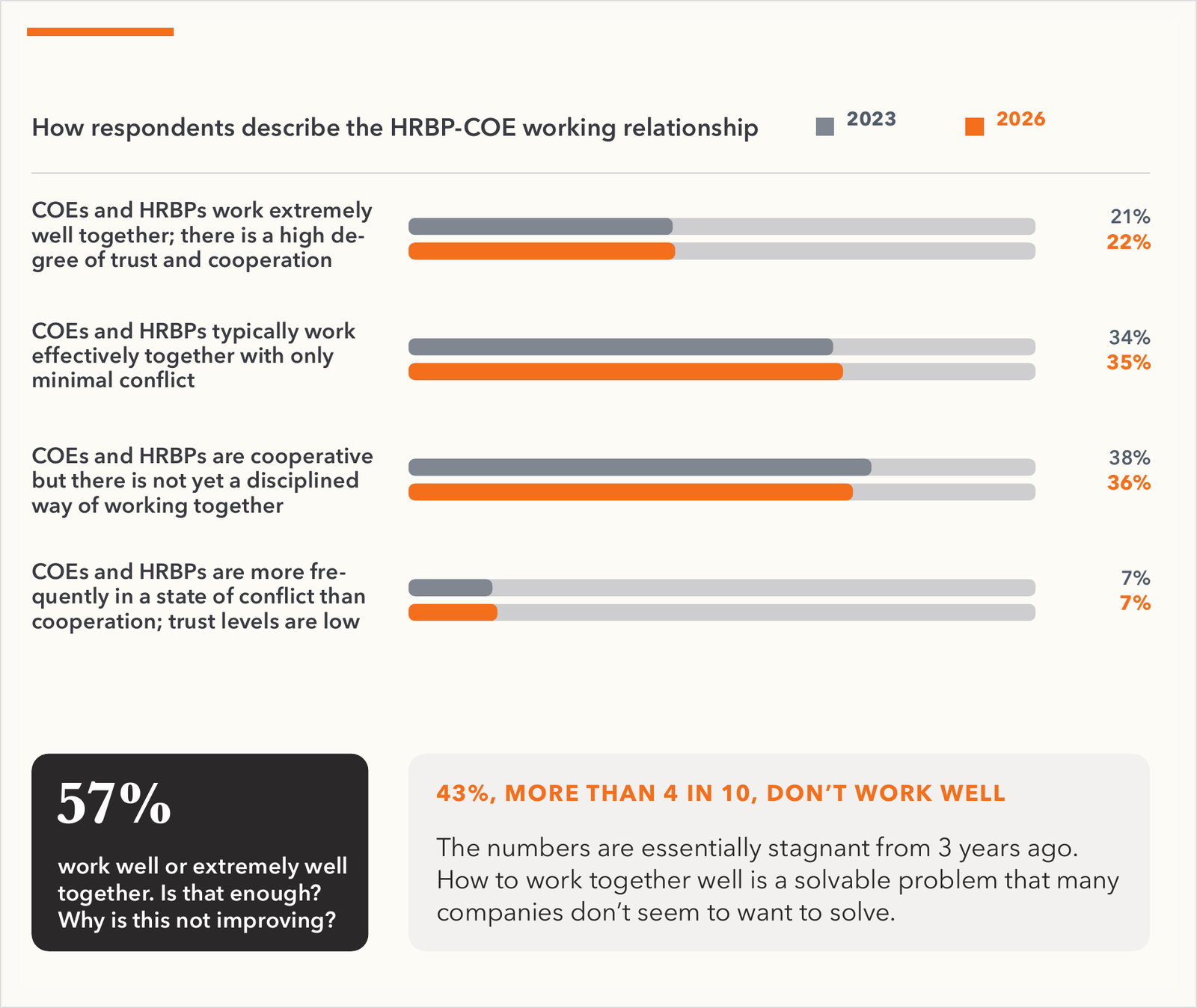
The more troubling finding is that HRBP-COE partnership has not improved. Only 22% describe extremely strong trust and cooperation. Another 36% say HRBPs and COEs cooperate but still lack a disciplined way of working together.
3. The problem is execution, not the model
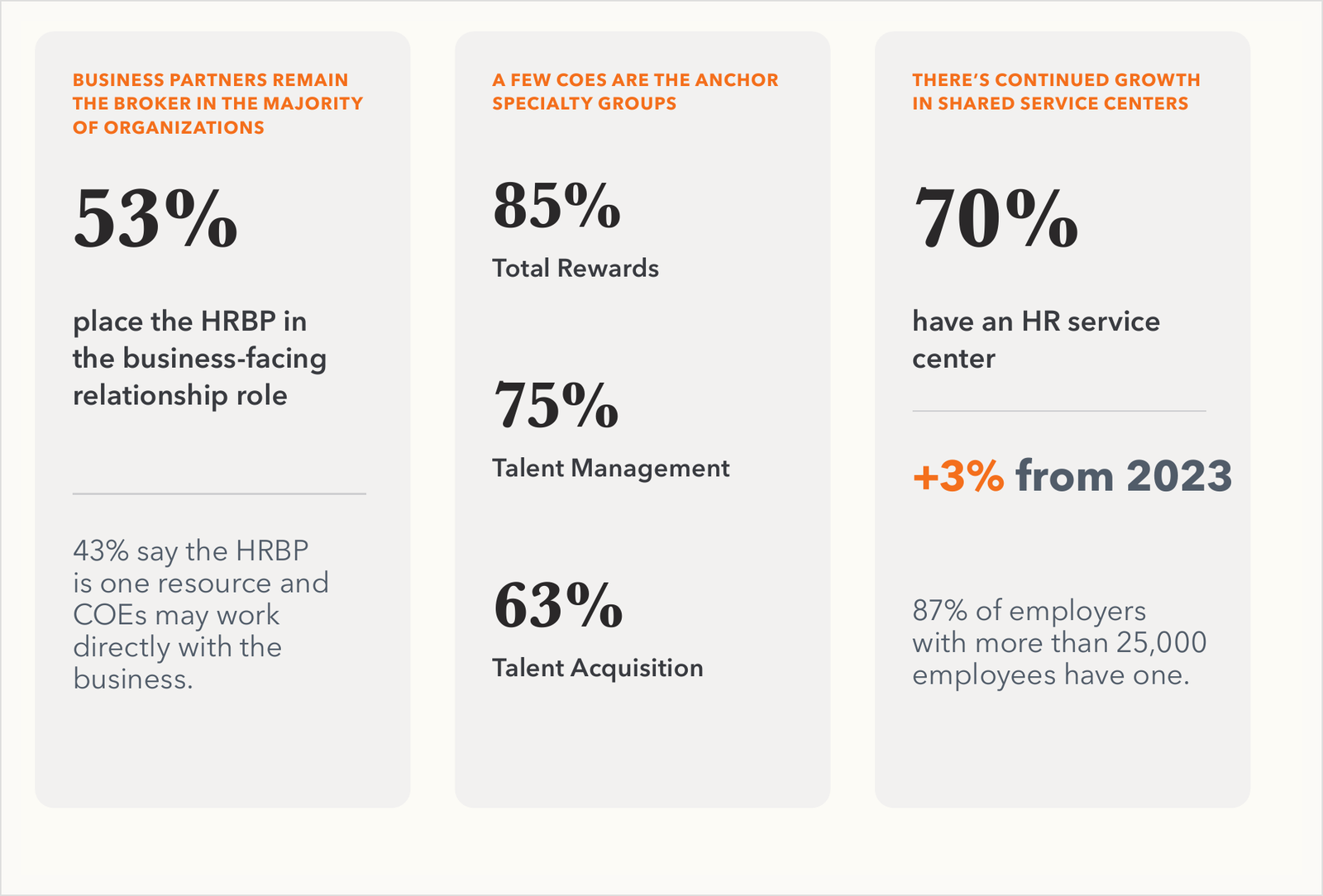
The three-pillar operating model remains the standard. HRBPs are still the business-facing broker in a majority of organizations, a small group of COEs anchor specialist work, and 70% of organizations have an HR service center. Among employers with more than 25,000 employees, that figure rises to 87%.
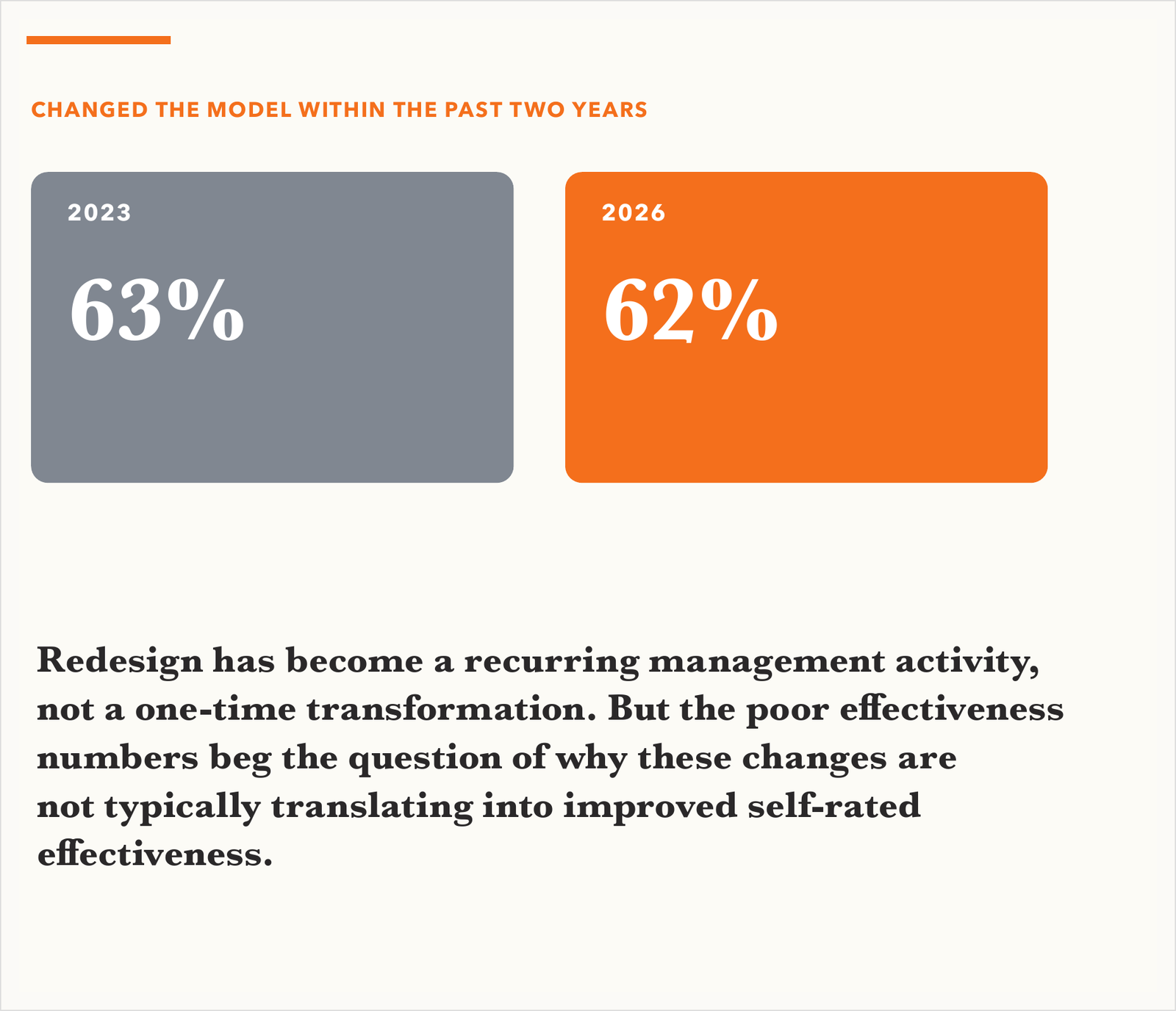
Organizations continue to redesign frequently: 63% had changed their HR organization design or operating model within the prior two years in 2023, and 62% said the same in 2026. Yet the effectiveness statistics have barely moved. Too many redesigns play around the edges without changing how work is assigned, handed off, measured and improved.
Only 27% rate their operating model very or extremely effective. A further 59% call it somewhat effective – a standard that HR leaders should not accept and business leaders should not have to tolerate.
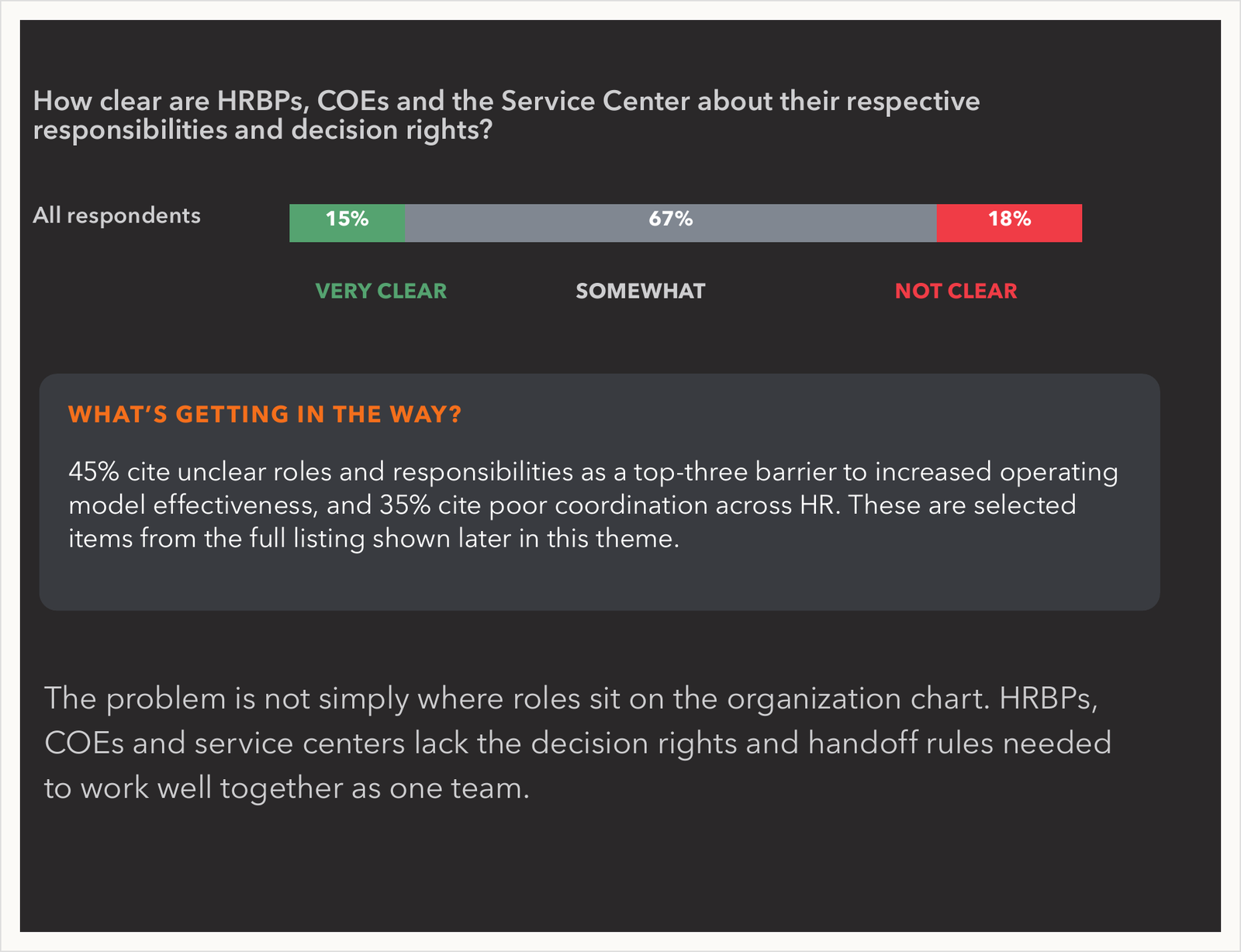
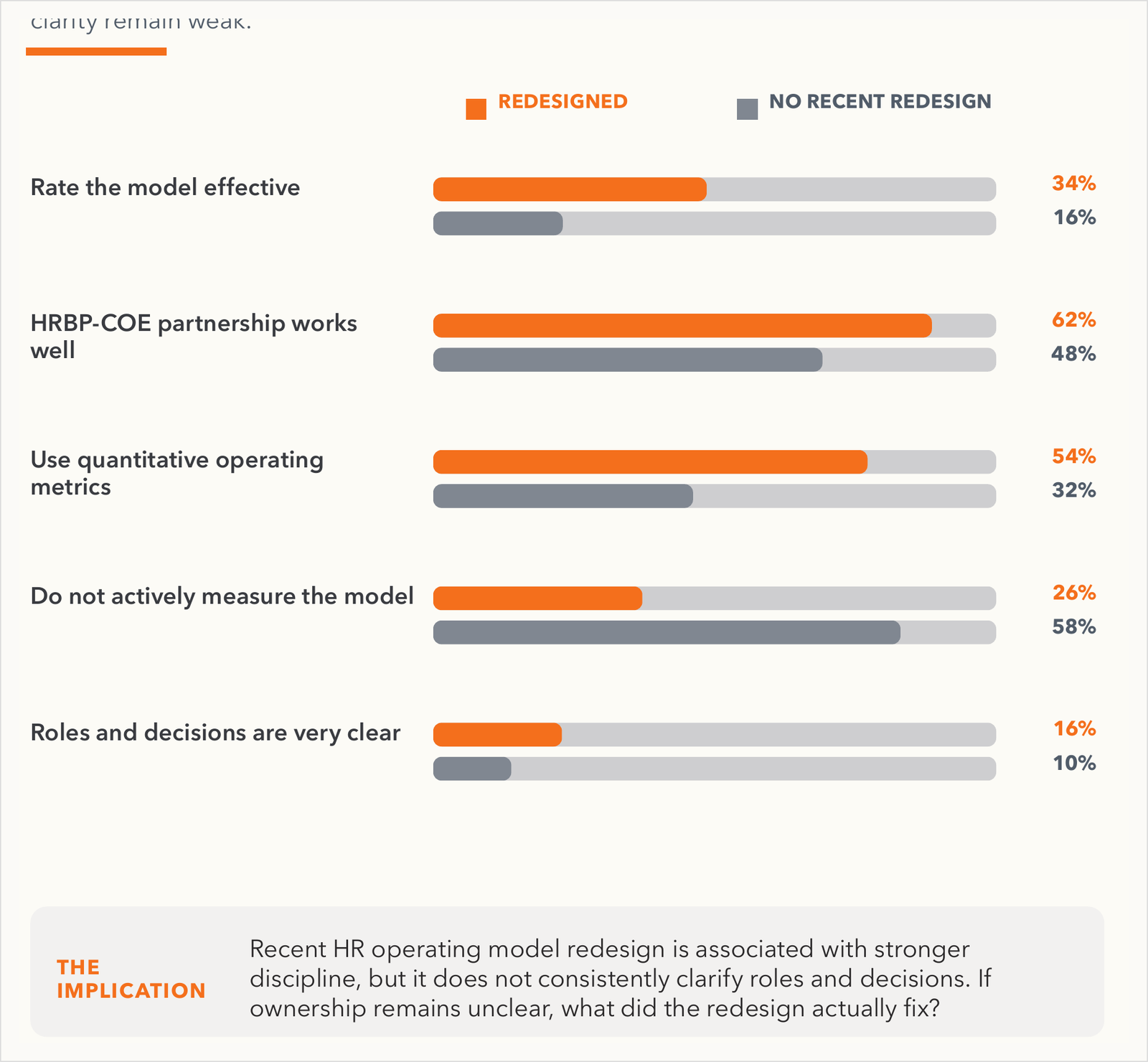
Role clarity is a central weakness. Only 15% say HRBP, COE and service-center responsibilities and decision rights are very clear. Another 67% say they are only somewhat clear.
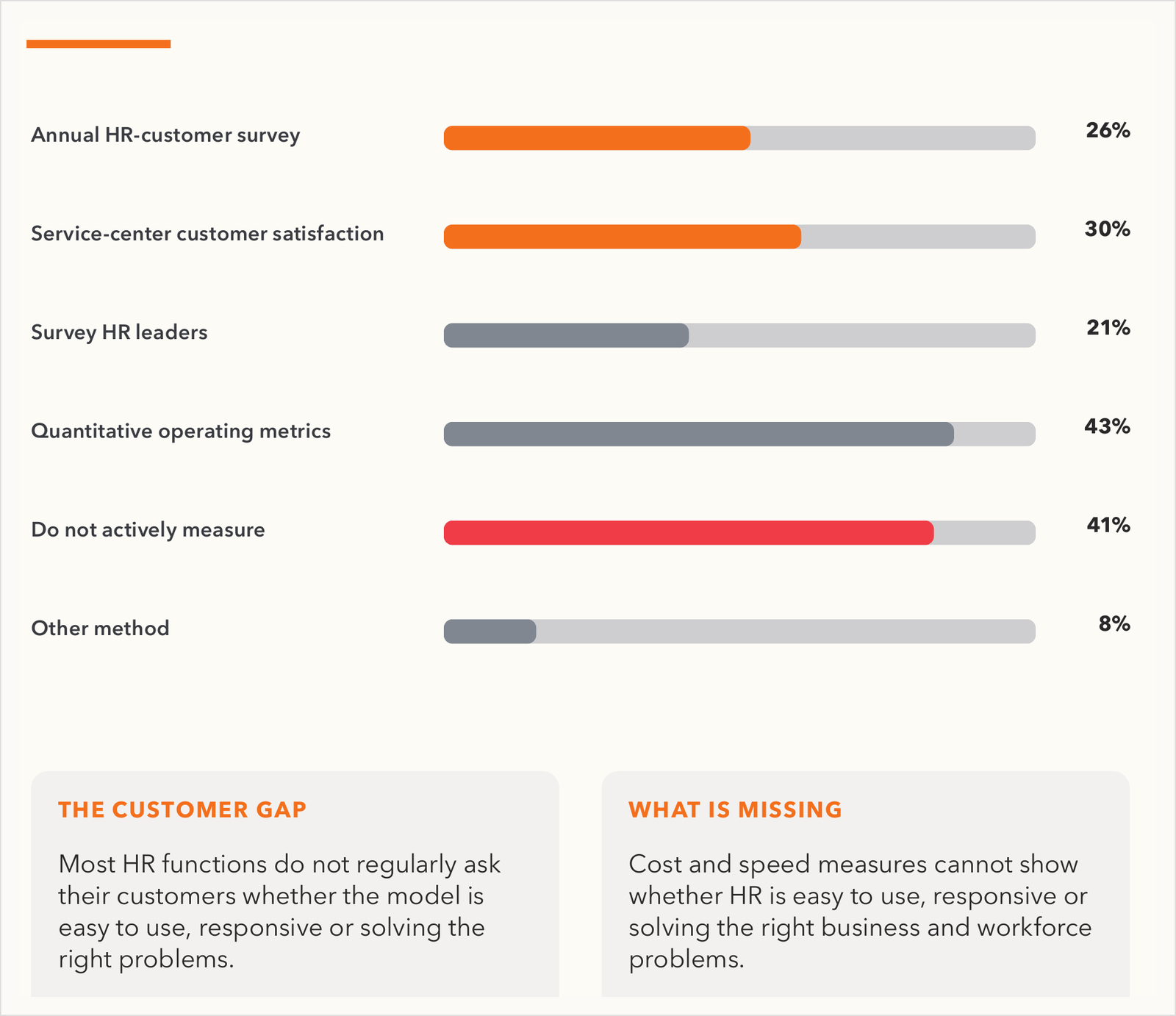
Measurement is equally weak. Forty-one percent never actively measure whether the operating model works. Only 26% use an annual HR-customer survey, and 30% use service-center customer satisfaction. Cost and speed metrics cannot tell HR whether the function is easy to use, responsive or solving the right business problems.
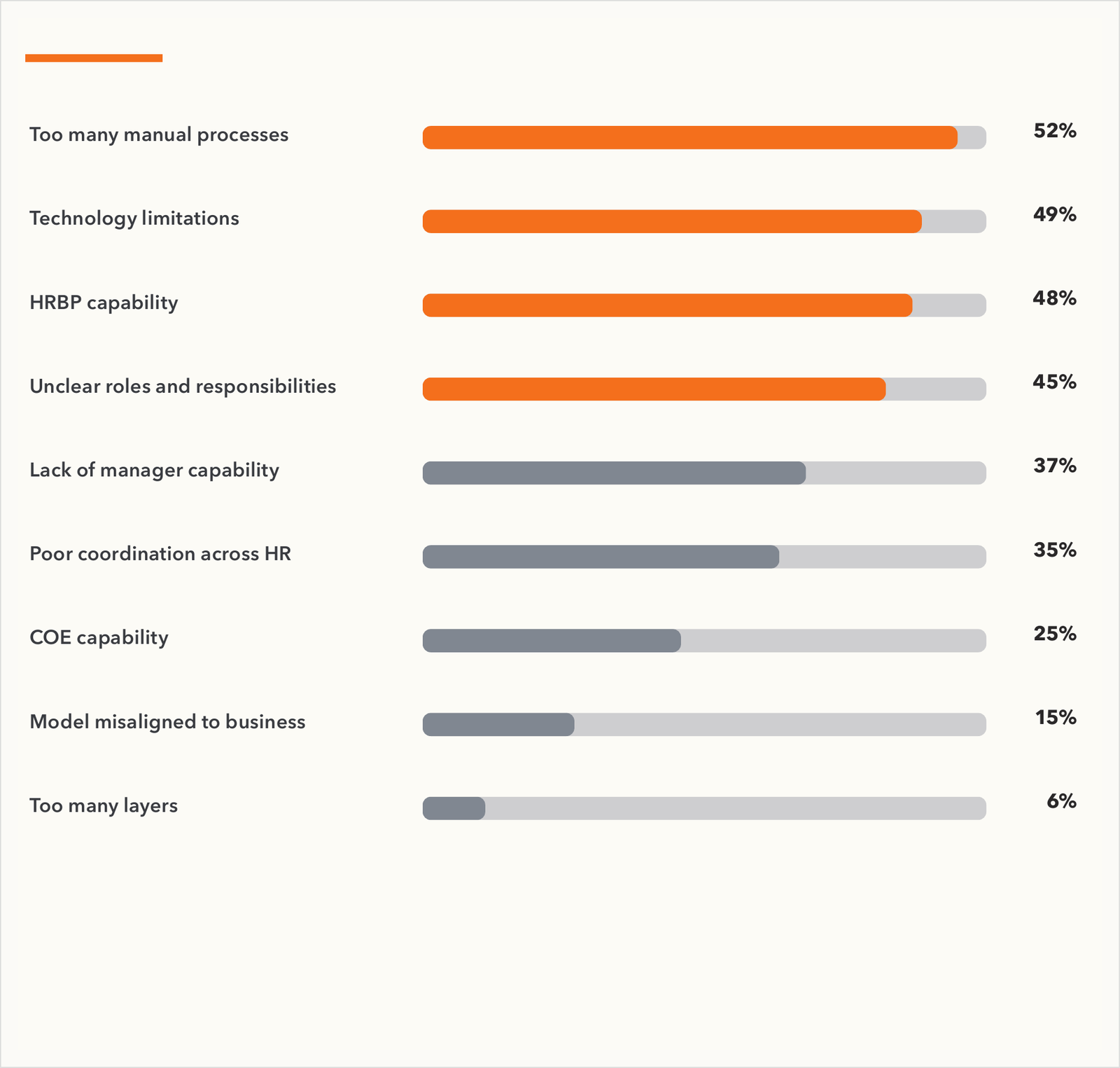
When asked for the three largest barriers to a more effective operating model, respondents pointed to too many manual processes (52%), technology limitations (49%), HRBP capability (48%) and unclear roles and responsibilities (45%). Structure was not the primary constraint.
Recent redesigners do report stronger discipline. They are more likely to rate the model effective, report a strong HRBP-COE partnership and use quantitative metrics. But redesign does not consistently clarify roles and decisions. The results show association, not cause.
4. AI expectations are far ahead of operating reality
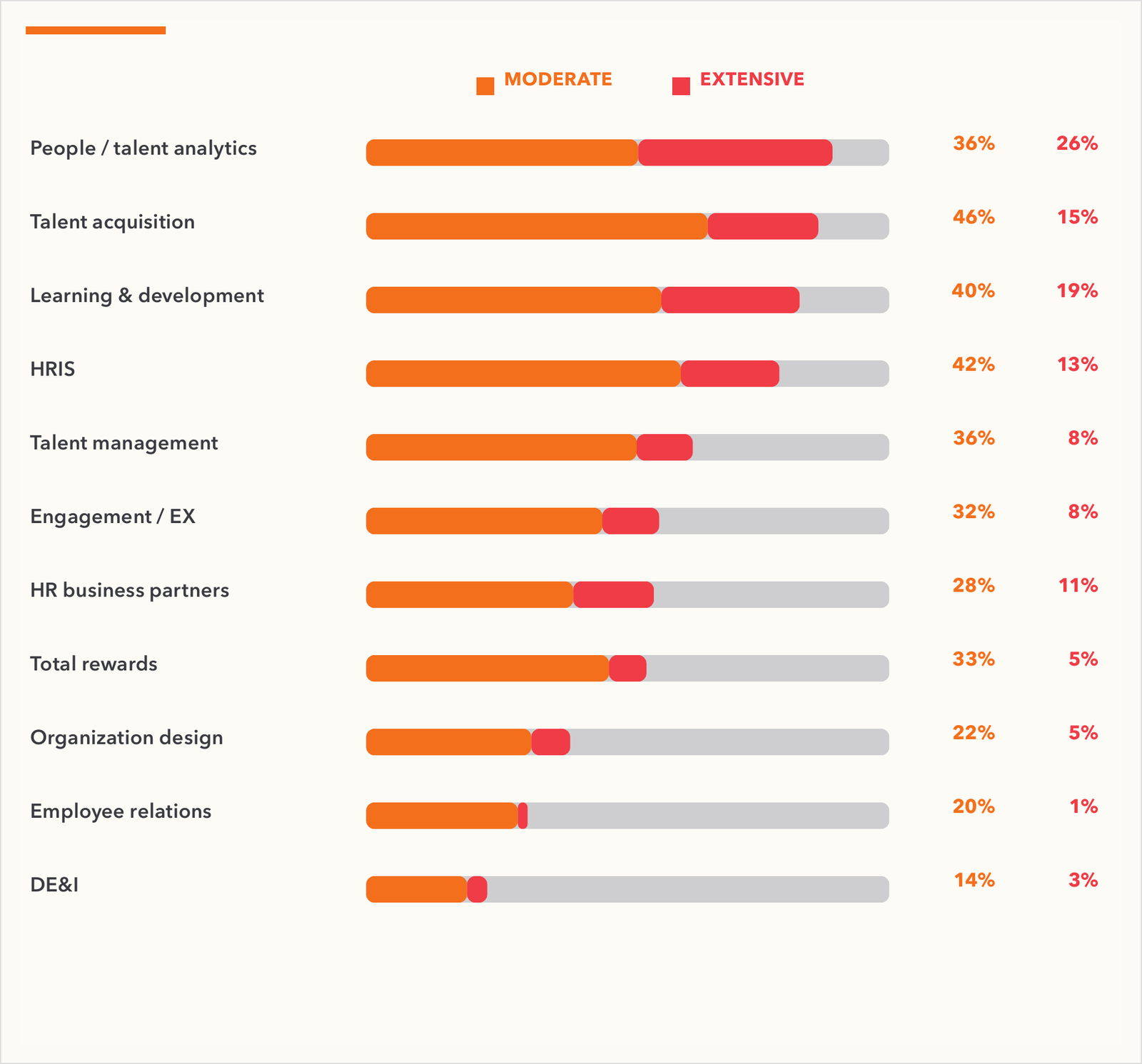
Two-thirds of respondents expect AI to reduce total HR headcount, yet 82% say AI has not meaningfully changed service-center staffing. Moderate AI use is common in several COEs, but extensive use remains rare. People and Talent Analytics leads at 26% extensive use, followed by Learning and Development at 19%. Every other function is at 15% or below.
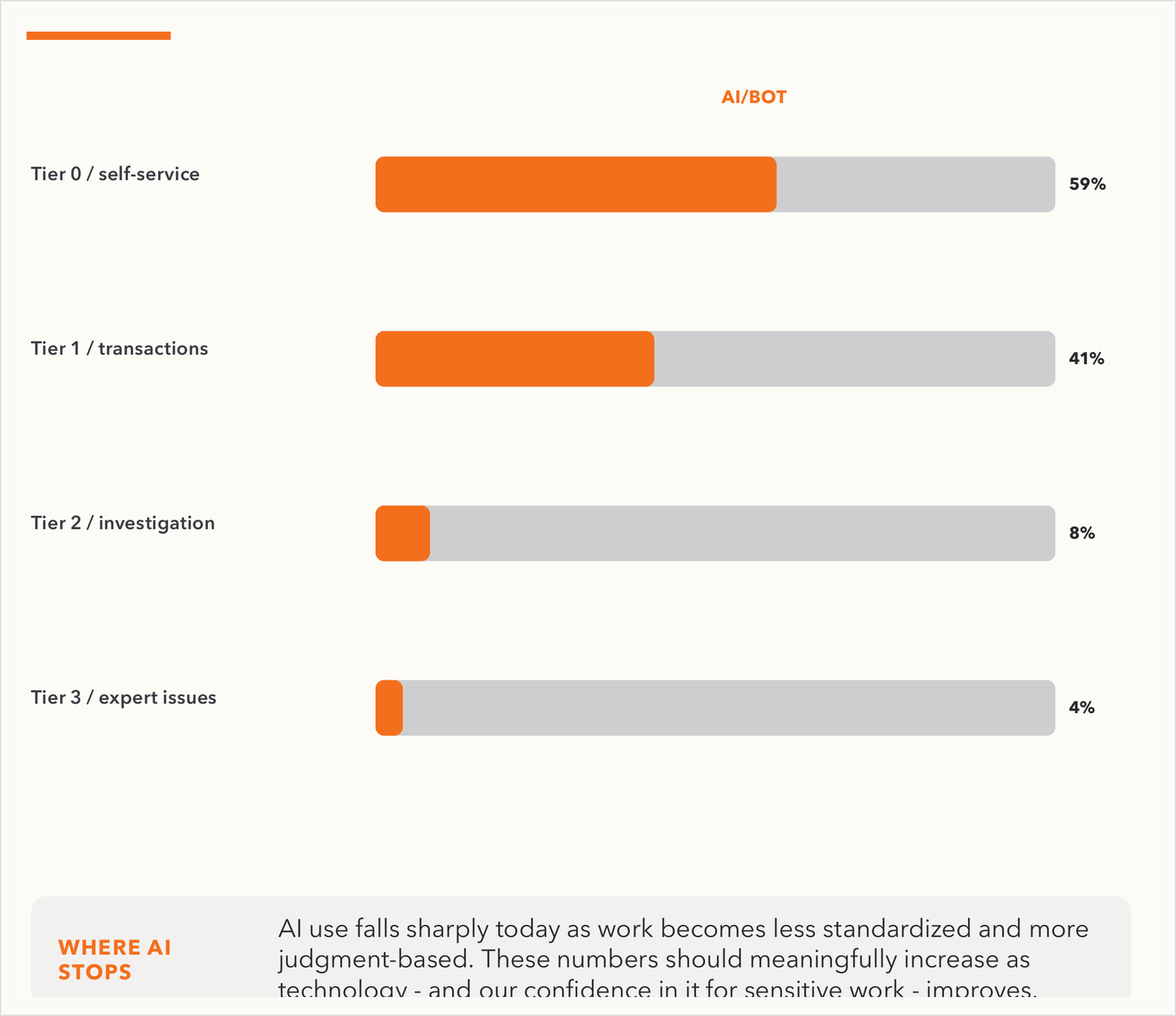
AI use also drops rapidly as work becomes less standardized and more judgment-based. It is used in 59% of Tier 0 self-service work and 41% of Tier 1 transaction work, but only 8% of Tier 2 investigation work and 4% of Tier 3 expert work.
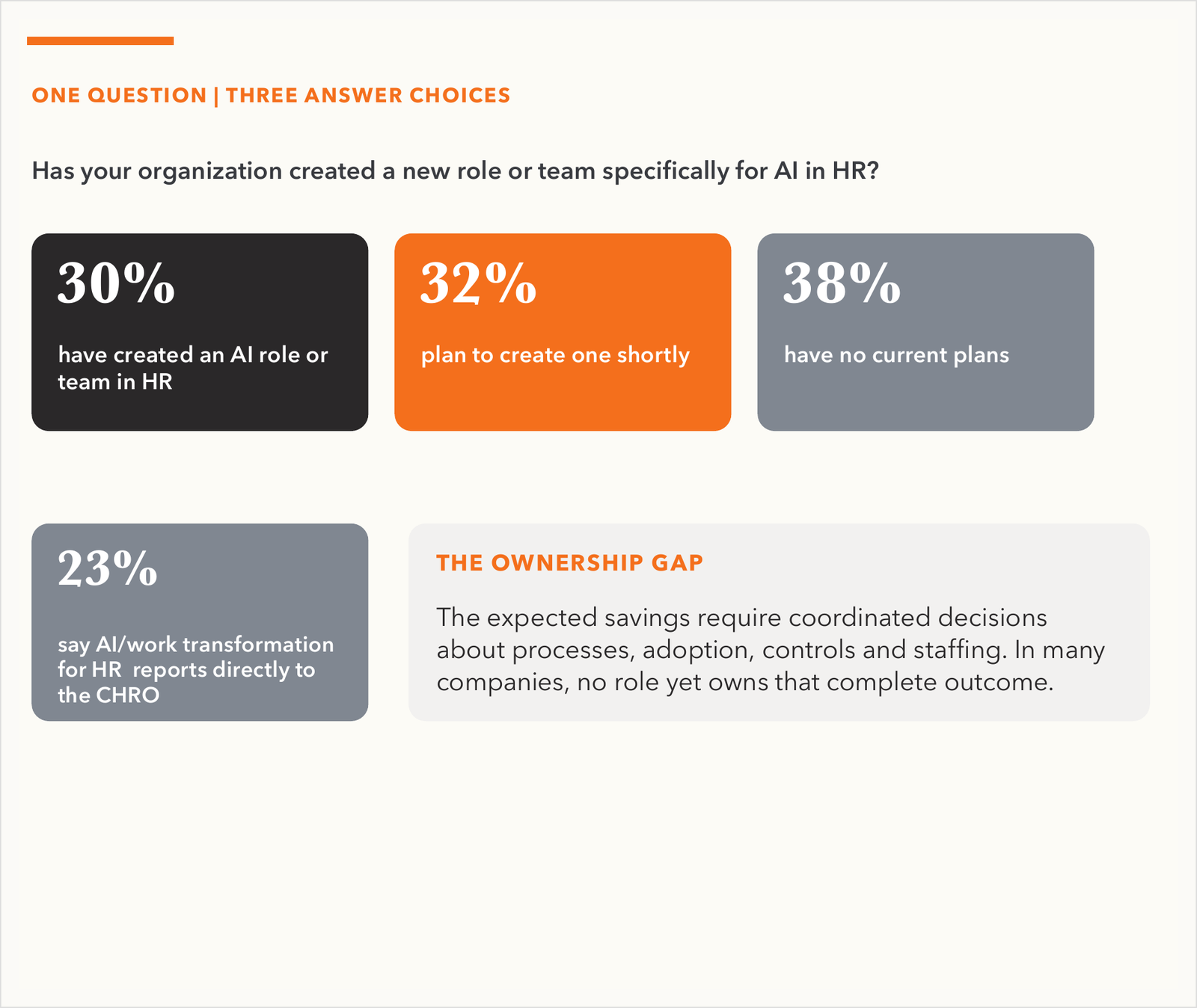
The governance model is still emerging. Thirty percent have created an AI role or team in HR, 32% plan to create one shortly and 38% have no current plans. Expected savings require coordinated decisions about processes, adoption, controls and staffing. In many companies, no role owns that complete outcome.
5. Effective firms make the familiar model work
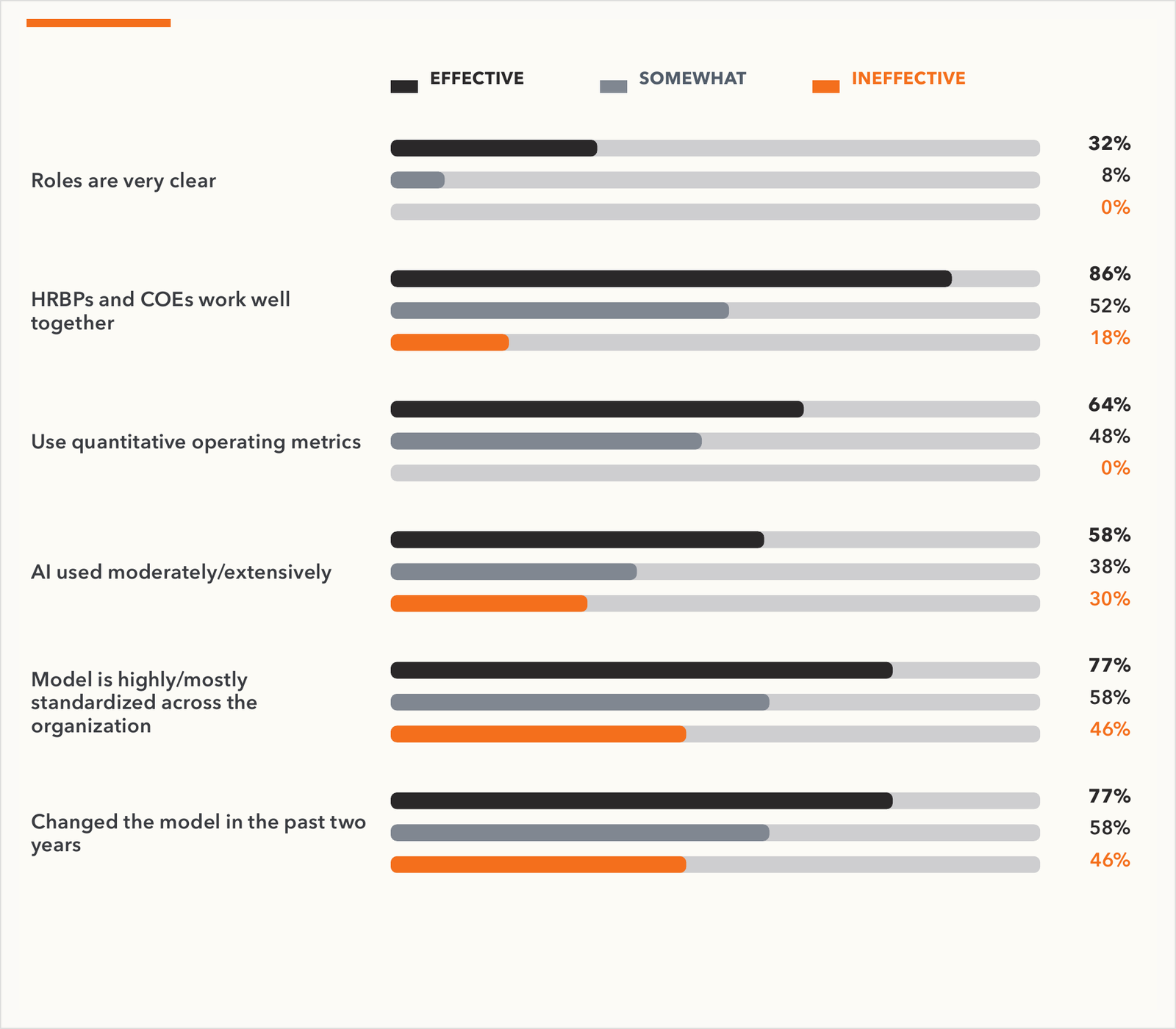
The largest gaps between respondents who rate their model effective and ineffective are execution gaps. Roles are very clear in 32% of effective firms and 0% of ineffective firms. HRBPs and COEs work well together in 86% versus 18%. Quantitative operating metrics are used by 64% versus 0%.
Because the same respondents rated both operating practices and effectiveness, the results may be biased by gathering the data from one source. Even so, the differences are too large to ignore.
What CHROs should do now
It is time. You are being forced to address how work gets done, so use this opportunity to redesign, clarify and optimize your HR operating model. Based on the report data and our consulting experience, our advice is straightforward.
Get serious about optimizing your HR operating model
Sixty-two percent of organizations adjusted their model, but the effectiveness statistics have not changed. Too many operating model changes play around the edges and avoid the core issues. Commit to making the difficult changes completely.
Set your True North and HR governance
A True North is a clear, concise and specific statement about how HR will operate. How should HR serve the business? What is the role of the HRBP, each COE and the service center? How will the parts work together? How will you measure the effectiveness of the operating model?
Create process and role clarity
Take the painful but necessary step of mapping exactly who does what in your key HR processes – not a RACI exercise. This defines the role clarity and decision rights that do not exist today. It is the wiring of the operating model.
Recontract with the business and HR
Discuss with the executive leadership team how HR will serve the business going forward: HRBPs, self-service, COE access, services and service levels. Get alignment on the plan – or more budget if leaders prefer a different plan. Then recontract with the HR team about what it means to work in HR going forward, including performance, careers and the employee experience.
About the survey
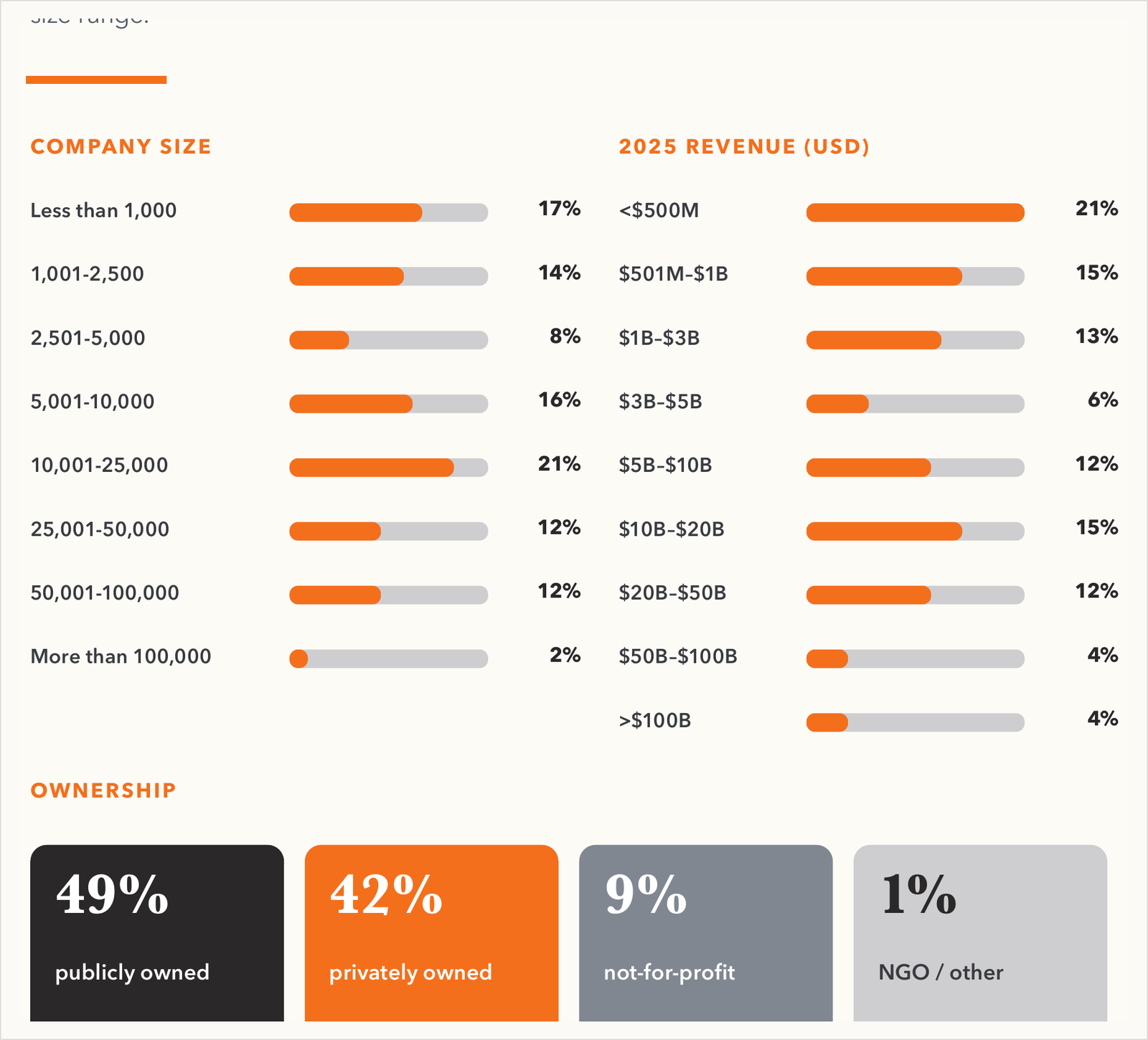
The 2026 survey includes a balanced mix of public and private companies and spans the full company-size range. Forty-nine percent of respondents represent publicly owned organizations, 42% privately owned organizations, 9% not-for-profits and 1% NGOs or other organizations. Results are based on 225 responding organizations. Percentages are rounded, so some totals may not equal 100%.
Talent Strategy Group advises the world’s leading companies, investors, foundations, NGOs and governments on HR and talent strategy, organization design, operating models, talent management and performance management. We are the leading educators of HR in talent management through our Talent Management Institute. To learn more about how we can optimize your organization’s HR operating model, contact Marc Effron at [email protected].